Exponential Episode 28: Hiding the Wiring
The most important milestone in crypto, argues Nic Roberts-Huntley, will be the one that goes completely unnoticed. In this episode

The most important milestone in crypto, argues Nic Roberts-Huntley, will be the one that goes completely unnoticed. In this episode

Nexus founder and CEO Daniel Marin appeared on the Exponential podcast this week to address the company's decision
If you've been paying attention, you probably saw that we were building toward 3.17. You made a


The top web3 marketing trends were on full display at DevConnect 2025, and if you squinted, many of them looked surprisingly familiar. While the industry prides itself on innovation, the most effective strategies showing up this year weren’t shiny new hacks. Instead, they were grounded in time-tested marketing fundamentals and lessons borrowed from more mature industries like traditional finance and tech.
Nowhere were these trends more evident than on stage at g(t)m Con, a marketing-focused side event that brought together leaders across web3 to compare notes, share hard-won learnings, and dissect the evolving role of marketing in an industry finally moving beyond hype cycles. Across panels, workshops, and hallway conversations, a theme emerged: Web3 marketing is growing up — and fast.
Here are four of my biggest takeaways from the brilliant marketers I had the chance to share the stage with.
Crypto Twitter will always be a cultural hub for this industry, but it’s no longer the center of the marketing universe. As Emily Lu, CMO at Hype, pointed out in her “Getting Ahead in Crypto Marketing” session, mainstream adoption is expanding dramatically, from fintech users to gamers to enterprise audiences. That means our marketing efforts must expand as well, across channels like LinkedIn, TikTok, Reddit, newsletters, and short-form video – places where “normies” actually spend time. She stressed that being successful on these channels means building custom content and user engagement strategies that fit the tone and style of the channel, not just of the brand.
These recommendations lined up with broader DevConnect trends where we saw companies emphasizing real-world use cases and talking more broadly to everyday users, as opposed to deep dives on infrastructure and crypto-native content.
Take-away: Marketers who want their products to break out of the crypto bubble need to think more like growth marketing leaders and less like KOLs. More specifically, performance marketing is a must, more polished multimedia is in, and creator-driven distribution across channels is essential.
"Team advocacy is indispensable to establishing and maintaining a culture within a marketing organization" - @L2Drez, VP of Global Marketing at Nexus during G(t)M Con & Web3 Marketing Church events at @EFDevcon pic.twitter.com/3h81s3CZmb
— Nexus (@NexusLabs) November 16, 2025
One of the most energizing themes across sessions was the use of contrast as a key positioning tool. Speakers highlighted the power of using juxtaposition to help audiences understand who you are.
Whether it’s framing your brand against outdated paradigms, legacy systems, or even misconceptions inside web3 itself, you’re helping to ensure people have an anchor point for how you want them to understand the differentiation at the center of your brand and products.
This was on display across the conference as we saw companies distancing themselves from over-financialized DeFi culture and tired AI narratives.
Take-away: In a space that’s cluttered with jargon and technical sameness, clarity is a superpower. Create familiarity with comparisons and standing apart from the pack.
 Nexus
Nexus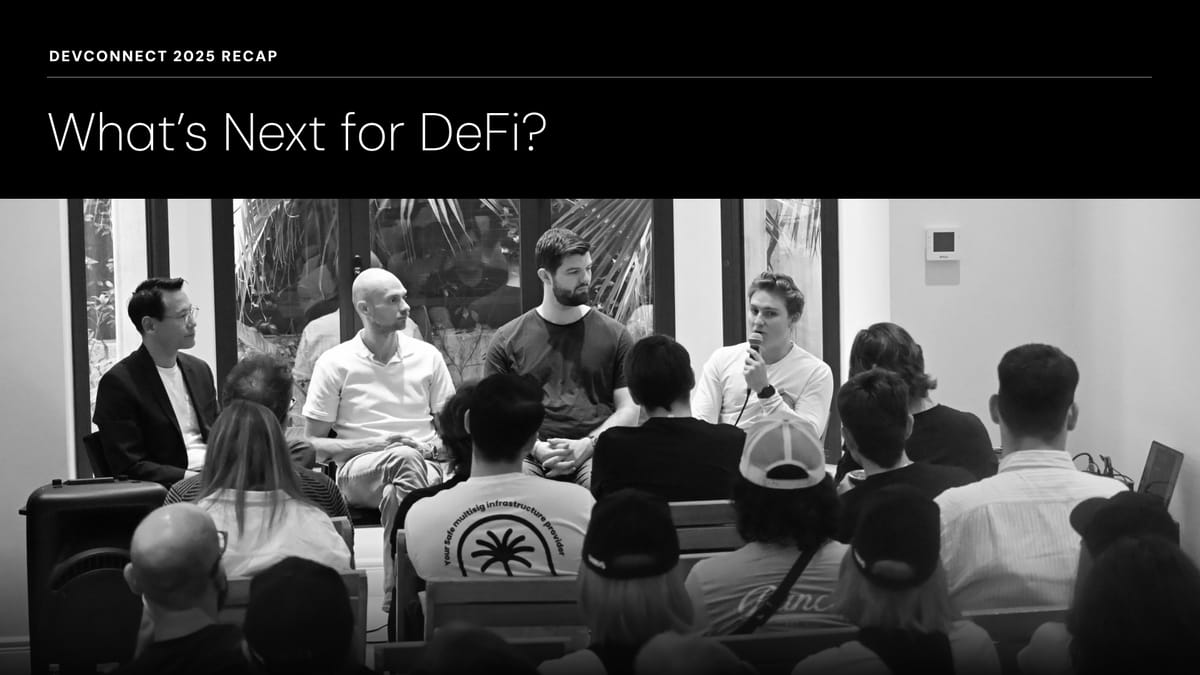
The session from Monad Foundation’s Nathan Cha’s, “Is the Token the Product?” sparked some of the most candid conversations of the day (and also timely, because Monad launched its ICO the next day) . His core message was simple but vital: token farmers are not your long-term community, but they play a powerful role in pre-TGE and listing moments. It’s important to engage with this audience while also keeping in mind that their motivations are often temporal, transactional, and often disconnected from product adoption.
Farmers can inflate metrics, distort feedback loops, and create FUD when their expectations aren’t met. As Nathan noted, even projects that “execute perfectly” face backlash once a token lists, because sentiment follows price — not product fidelity.
His session served as a reminder that while tokens can amplify awareness, they cannot replace the fundamentals of segmentation, targeting, and positioning.
Take-away: Define who your real users are early. Design incentives for them — not for extractive participants. Build goodwill with the people who will stay, not those who are optimized to leave.
 Nexus
Nexus
Across multiple panels — including my own on building marketing teams—the role of AI came up frequently. Tools for AI-driven SEO, content workflows, and insights generation are now standard parts of any modern web3 marketing stack.
But the consensus was equally strong: AI cannot replace taste.
If anything, AI’s ubiquity makes human creativity more important. When every team has access to the same automated workflows, differentiation comes from taste-makers. This includes cultivating strategists, storytellers, creatives, and community leaders who know how to turn insights into narratives, and narratives into culture.
Take-away: Crypto brands that win don’t just “ship products.” Rather, they shape meaning. That work still requires intuition, emotional intelligence, and distinct points of view.
 Nexus
Nexus
As we head into the new year, these takeaways point toward a more mature phase for web3 marketing — one that blends the experimental spirit of early crypto with the strategic rigor of traditional industries.
Expect to see marketers deepen cross-channel strategy, invest in brand clarity, get more disciplined about who they’re building for, and lean into AI for leverage — while doubling down on human creativity for differentiation.
What’s old is new again. And honestly? It’s exactly what our industry needs.